

AI writing tools are now widely used by students, teachers, writers, and professionals. Because of this, many people ask one important question: how accurate is Turnitin AI detector? Universities rely heavily on Turnitin to protect academic honesty, so understanding its accuracy is essential.
What Is Turnitin AI Detector?
Turnitin AI Detector is a feature inside Turnitin’s plagiarism system designed to identify text that may have been written using AI tools such as ChatGPT. It does not confirm cheating but provides a probability score showing how likely a piece of content is AI-generated.
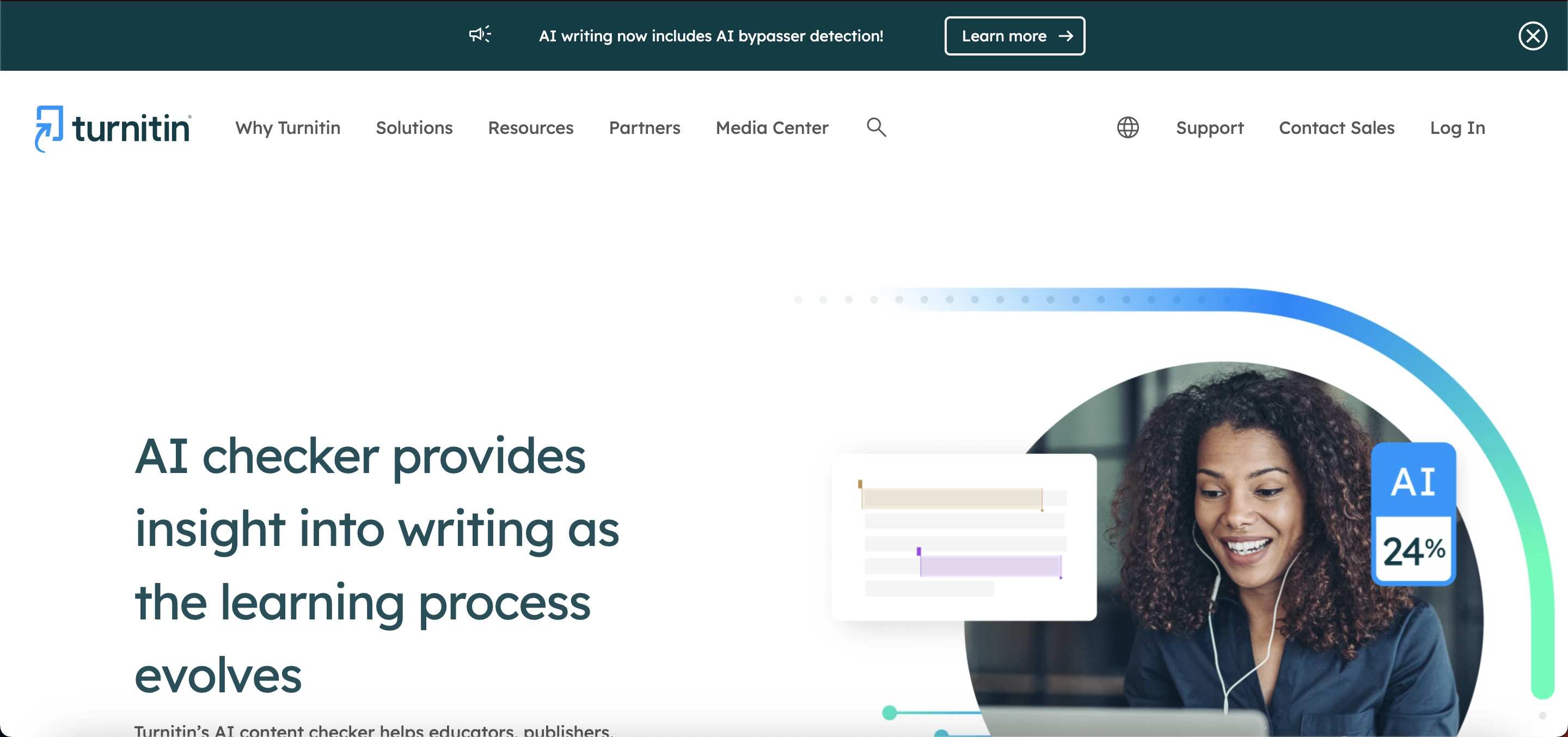 The system analyzes writing patterns rather than checking against an AI database. This makes many people wonder how accurate is Turnitin AI detector when real human writing can sometimes look similar to AI text.
How Turnitin AI Detector Works
To understand how accurate the Turnitin AI detector is, it is important to first understand how it works behind the scenes. Unlike traditional plagiarism detection that looks for copied content, Turnitin’s AI detection system analyzes writing patterns and behavior.
It focuses on factors such as sentence structure consistency, predictable phrasing patterns, repetitive word usage, low variation in tone, and unusually balanced or fluent writing. AI-generated text often follows recognizable and structured patterns, and Turnitin flags content that strongly matches those patterns.
However, because the system relies on pattern recognition rather than definitive proof, this approach also introduces limitations that can directly affect its overall accuracy.
How Accurate Is Turnitin AI Detector Overall?
The short answer is that the Turnitin AI detector is moderately accurate, but not perfect. Studies, user experiences, and academic feedback suggest that it performs best when the content is fully AI-generated, when minimal editing has been done, and when the writing closely follows common AI patterns.
In these situations, the system can more easily recognize predictable structures and phrasing.
However, questions about how accurate the Turnitin AI detector truly is begin to arise when AI-generated content has been heavily edited, when human writing is highly polished and structured, or when non-native English writers use simpler sentence patterns that may resemble AI output.
In fact, Turnitin clearly states that AI detection results should not be treated as final proof of misconduct, but rather as one indicator that requires human review and further evaluation.
Accuracy Percentage: What Do the Scores Mean?
AI Detection Score Range | What It Means | Explanation |
|---|---|---|
0–20% | Likely human-written | The writing shows natural variation and patterns commonly found in human work. |
20–50% | Mixed or unclear | The content may contain both human and AI characteristics, making the result uncertain. |
50–100% | Likely AI-generated | The text strongly matches patterns often seen in AI-written content. |
False Positives: A Major Accuracy Concern
One of the biggest issues affecting how accurate the Turnitin AI detector is involves false positives. False positives occur when human-written content is mistakenly flagged as AI-generated, when ESL (non-native English) writing is misidentified due to simpler sentence structures, or when a formal academic tone triggers AI-like signals.
Because the system analyzes writing patterns rather than intent, certain natural writing styles can resemble AI output. Many students have reported cases where their original work was incorrectly flagged, highlighting an important concern.
This demonstrates that Turnitin AI detection results should always be reviewed manually and interpreted carefully, rather than being accepted as unquestionable proof.
False Negatives: When AI Goes Undetected
False negatives occur when AI-generated content is not flagged by the system. This can happen when the AI text has been paraphrased, when the user edits the sentence structure, when personal examples are added, or even when small grammar mistakes are intentionally introduced.
These changes can disrupt the predictable patterns that detection systems typically look for. As a result, how accurate the Turnitin AI detector is depends heavily on how the AI-generated content is used, edited, and modified before submission.
Key Features
Here are the main features that influence how accurate is Turnitin AI detector:
Feature | Detailed Description |
|---|---|
Pattern-Based Analysis | Turnitin AI Detector does not rely on searching databases for AI-generated text. Instead, it examines the writing style, sentence structures, word choice, and overall patterns in the text. By comparing these patterns to known AI writing behaviors, it provides an indication of whether content is likely AI-generated. |
Percentage Scoring | The system provides a probability score rather than a simple yes/no answer. For example, a score of 70% suggests a high likelihood of AI-generated content, while lower scores indicate human-like writing. This allows educators to interpret results carefully instead of making automatic judgments. |
Academic Context Focus | Turnitin AI Detector is specifically designed for academic writing, including essays, assignments, and reports. It takes into account the style and structure commonly found in student submissions, making it more reliable in an educational context compared to generic AI detectors. |
Instructor-Only Access | Students typically cannot view AI detection results. Only instructors and authorized institutions have access, which ensures privacy and prevents misuse or unnecessary stress among students. |
Integration with Plagiarism Reports | AI detection results appear alongside Turnitin’s plagiarism and similarity reports, giving instructors a more complete picture. This integration allows educators to see both originality and AI likelihood in one place, helping them make better-informed decisions. |
Regular Model Updates | Turnitin regularly updates its AI detection algorithms to improve performance and keep up with the evolving capabilities of AI writing tools. While this does not make it 100% accurate, it ensures the system stays relevant and effective. |
Use Cases of Turnitin AI Detector
Understanding use cases helps explain how accurate is Turnitin AI detector in different environments.
For Universities
Used to support academic integrity reviews.
For Educators
Helps identify assignments that may need closer inspection.
For Institutions
Provides data for policy decisions, not punishments.
Turnitin is not designed to accuse students automatically. Its role is advisory, not judgmental.
Read Also: What AI Detector Does Turnitin Use: Complete Guide 2025
Turnitin AI Accuracy for Students
For students, how accurate the Turnitin AI detector is often depends on individual writing habits. Strong academic writers with highly structured and polished writing may sometimes get flagged because their work appears unusually consistent or fluent.
On the other hand, AI-assisted content that has been carefully edited can pass undetected if the original patterns are significantly changed.
Short answers are also harder for the system to analyze accurately because there is less text to evaluate for consistent patterns. For these reasons, educators are encouraged to review drafts, outlines, and a student’s writing history before making any final conclusions about potential AI use.
Turnitin AI Accuracy vs Other Tools
When compared to free AI detection tools, Turnitin generally performs better in academic content analysis. It tends to produce fewer random or inconsistent results and avoids making extreme claims about certainty. Its system is designed specifically for educational environments, which gives it an advantage in analyzing structured academic writing.
However, no AI detector today is 100% accurate, and even Turnitin acknowledges that its AI detection technology is still evolving and should be used as a supportive tool rather than definitive proof.
Turnitin AI Detector and Privacy Protection
Turnitin states that student work is protected under its privacy policies. The AI detection system does not store personal data separately, and the results are not shared publicly or used outside the educational environment.
Access to AI detection reports is limited to authorized instructors and institutions. These privacy practices are aligned with common educational standards, which helps build trust among users.
However, while strong privacy measures are import
Trustworthiness of Turnitin AI Detector
No AI detector, including Turnitin, should be trusted completely. When evaluating how accurate is Turnitin AI detector, it is important to use it as a support tool rather than as the sole basis for decisions.
Its results should always be combined with human judgment and careful review. Automatic penalties based solely on AI scores should be avoided.
In fact, many universities now require instructors to provide additional evidence, such as drafts or writing history, before taking any action based on AI detection results.ant, they do not directly affect or improve the accuracy of AI detection results.
Tips for Students to Avoid False Flags
To reduce the risk of being incorrectly flagged by Turnitin AI Detector, students should focus on writing in their natural voice and avoid trying to overly mimic formal or polished language.
Using drafts and outlines can help organize thoughts and show the development of ideas, which reflects human writing patterns. Maintaining a record of writing history also provides evidence of original work.
Additionally, it is important to cite sources clearly whenever using references or external information. Following these practices helps demonstrate originality and ensures that responsibly using AI tools does not lead to false flags.
Limitations of Turnitin AI Detector
Despite its strengths, limitations remain:
Cannot prove authorship
Struggles with mixed content
Less accurate for short texts
Biased toward formal writing
These limitations explain why how accurate is Turnitin AI detector remains a debated topic.
Is Turnitin AI Detector Improving?
Turnitin regularly updates its detection models. Accuracy has improved since early releases, but AI writing tools also evolve rapidly. This creates an ongoing challenge where detection tools must constantly adapt.
Summary
Turnitin AI Detector is a useful tool for identifying potential AI-generated content, but it is not fully accurate. It works by analyzing writing patterns and provides a probability score rather than definitive proof.
False positives and false negatives can occur, so its results should always be combined with human judgment. Students can reduce the risk of being flagged by writing naturally, using drafts, keeping writing history, and citing sources clearly. Overall, Turnitin AI Detector is best used as a support tool to help maintain academic integrity.
Frequently Asked Questions (FAQs)
How accurate is Turnitin AI Detector for essays?
Turnitin AI Detector is reasonably accurate for detecting fully AI-generated essays but may be less reliable for edited or partially AI-assisted content.
Can Turnitin AI Detector make mistakes?
Yes, false positives and false negatives can occur. Human-written content might be flagged, and some AI-generated text may go undetected.
Does Turnitin detect ChatGPT or other AI tools?
Turnitin can identify patterns similar to AI-generated content, including text from ChatGPT, but detection is not guaranteed.
Can students see AI detection results?
No, typically only instructors have access to AI detection scores. Students usually receive feedback through overall similarity or instructor comments.
Is an AI detection score proof of cheating?
No, Turnitin’s AI score is only an indicator. It should not be used as definitive proof of misconduct. Instructors are advised to consider other evidence before making any judgment.
How can students avoid false flags?
Students should write in their natural voice, use drafts and outlines, maintain writing history, and clearly cite sources to reduce the risk of being incorrectly flagged.
Does Turnitin AI Detector violate privacy?
No, student work is protected, personal data is not stored separately, and results are not shared publicly. Privacy policies follow educational standards.